Abundance as Populism
Viewing the ideas as opposites misreads big-city politics.
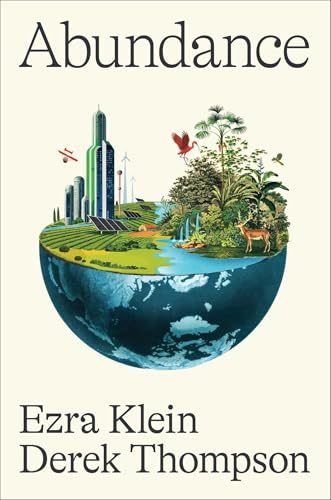
Over the last few years, “Abundance” has emerged as a new movement in American politics. Popularized by Ezra Klein and Derek Thompson in their book, appropriately named Abundance, the movement argues that American government thinks too much in terms of scarcity, often preventing useful projects like housing and transit through needlessly complex bureaucracy.
The central idea is mainly marketed towards Democrats in large cities, as Klein and Thompson argue that these places are the worst offenders, squandering untold amounts of wealth and potential on endless process and veto points. And they argue that Democrats will be more electorally successful if they can show that the party is the party of “building.” That being said, the ideas have attracted a fairly broad range of supporters, from Bernie Sanders to ideological libertarians (although both may have different ideas about the end goal of Abundance).
Abundance has also sparked a backlash. A predominantly left faction of the Democratic Party argues that Abundance misses the point. In their view, the entire movement is a giveaway to corporations at a time when the party should be focused on reducing inequality and taking on special interests. In this faction’s view, it’s also bad politics, as Abundance is far less popular than economic populism that focuses on giving people the economic system they—rather than an Econ 101 textbook—want. And these advocates accuse Abundance advocates of being hypocritical, pointing out that they are often the same people who say Democrats must moderate to win elections.
But this debate misses the core reason why Abundance has seen so much success in large cities: in big cities, Abundance is populism.
It’s worth remembering that populism is not a static set of policies. What is “populist” depends entirely on the specific political context. Instead of set policies, populism usually makes four key arguments:
1. We face important problems
2. It is critical that those important problems are urgently solved
3. The solutions are straightforward
4. Special interests and the current political elites are blocking these logical and necessary solutions and need to have their influence reduced or broken in order to make progress on these important problems.
Looking at it this way, it is clear that Abundance is a form of populism—just one that is uniquely fitted to large American cities in 2025. Abundance advocates propose that there are immediate and important problems, namely a lack of housing, transit, and productive building. Most of the solutions they propose are fairly straightforward: eliminating restrictive zoning requirements, reducing discretionary review, and taking away complicated bureaucracy that places onerous requirements on new projects. These solutions often explicitly attack the “establishment” in many of these large cities: older homeowners, unions, and advocacy groups that seek to enforce their myopic priorities at the expense of the broader good.
For political watchers obsessed with national politics, it seems odd to single these groups out as part of a political establishment that needs to be broken. Unions have seen declining membership for decades (while constantly losing federal policy battles). Progressive activists have hardly seen much success in Washington recently, especially under the Trump Administration. And what’s more, these groups often claim to advocate for the downtrodden, specifically people who aren’t represented by traditional political power players.
But in large cities, the dynamic flips. Public-sector and trade unions often successfully lobby to require union labor for every project, raising labor costs and slowing down building progress. Progressive activists can block or stir up opposition to new projects using rhetoric about gentrification and displacement. Even if they do not block projects immediately, they frequently push governments to delay them for years to conduct “environmental review” or “community listening sessions.” And older homeowners wield the most power: with relatively few national political priorities, they focus their energy on local affairs, having a heavy hand in dictating zoning, preservation, and transit policy.
Abundance has gained momentum specifically because it is one of the first movements to explicitly push back on local power players that previously saw little attention. With the rising cost of living in cities, voters were ready for something to offer them a bold solution. Both moderate and progressive mayors had failed to solve the problem by operating within the same paradigm. Abundance offered a populist alternative, a vision where the problem is a corrupt and ossified establishment captured by special interests.
It didn’t matter that the special interests weren’t powerful on a national scale. Voters are not stupid. They understand that their cities are very blue and that many barriers to building in cities exist for nominally progressive reasons. They understand that older homeowners frequently complain about construction at the same time that the value of their own homes has skyrocketed.
More than just the groups themselves, Abundance pushes back on the broader “elite consensus” in big-city governance. Beginning in the 1970s, large cities adopted a model of government that was skeptical of change. It viewed resources as scarce, with humans, building, and change as problems that needed to be managed. The justifications varied, but at bottom, big cities changed and built at a glacial pace. Even as demand to live in them skyrocketed, cities never moved on from this paradigm. Much like other forms of populism, Abundance piqued voter interest because it blamed this elite consensus right as voters became truly fed up with the status quo.
It seems, then, that Abundance is not so much the opposite of populism—nor a movement solely of elite technocrats. Rather, Abundance reveals how malleable the core tenets and strategies of populism are depending on context. Activists can’t see it as populism because it benefits groups they perceive as powerful—wealthy transient young people, developers, energy companies, and other “elite actors.” But this framing fixates too much on national political theory. Abundance is successful because, at the local level, it is the populist backlash to the paradigm that has dominated big cities for decades.
Originally published Nov. 14, 2025 in the FullyReporting newsletter on Substack.